Maybe this is your first time or maybe you are adding to your crew, either way, we are so excited for you. We want to make sure that you are prepared to be the very best puppy parent you can be and offer you an amazing resource. Being a responsible dog owner ensures that you provide a plan to train your canine companion to be the calm, well-mannered, and the best behaved doggie that you could ever want. A trained dog is less stressful, not only in the beginning but for life. Proper socialization and manners will give you the dog you are envisioning. But you have to do the work and stay committed. They deserve it!


Baxter & Bella Training
Start training them the day they come home and do it from the comfort of your own house. Online training is one thing, but an entire lifetime membership is a whole new adventure for you and your pup. Please get started today, before you pick up your new fur baby, and make a plan to set you both up for success! Make sure to download the app!!
So, how do you do that? Visit baxterandbella.com. You can feel confident that you are giving your pup and your family the relationship you desire for a lifetime of fun, excitement, and happiness! In the digital form, here is a video on the “why” behind training! “WHY ONLINE TRAINING” VIDEO For in person training, we highly recommend Vivi from Loving Dog Training! Loving Dog training will come to your home for amazing training sessions and help where you want it (ie: setting up your puppy area)! Sabrina from Balanced Obedience and Top Dog Woof is also a fantastic local trainer.
It is important to start offering your whirling dynamo a few lessons that will make their life with you easier. For example, you may start leash training and work on basic 14 commands, like sit and stay. You’ll also want to handle your pooch as often as possible. Be sure to handle your puppy’s feet, nails, mouth and ears. Your loving touch teaches her important lessons — that you’re her friend and her master — and it prepares her for the important handling your veterinarian needs to do when she examines your puppy. This interaction will also make her easier to groom — which can be critical if you’ve chosen a breed with a beauty parlor coat that requires daily brushing. Now is a good time to teach your puppy her name. To help her learn her name more quickly, use food rewards. This way she will associate positive feelings when you call for her. And while your puppy isn’t ready for the public yet, it is a fine time to invite company over. Socializing with other people and pets will help make her a friendlier, better-mannered companion.
All too soon, your cuddly little puppy will blossom into a canine perpetual motion machine. So enjoy these first few weeks with your new friend and practice patience.
She has a lot to learn, and you’re just the person to teach her the loving lessons to prepare her for life with you.
The Role of “Puppy Puppy Puppy” Recall (by Jeanette Forrey)
We imprint all of our puppies to the recall of “puppy puppy puppy”. In effect, this is actually their “name” and not their assigned “litter name” that we may have referred to throughout our correspondence. This is a lifesaving tool we are giving you, so what can you do to ensure your puppy continues to have this vital recall?
1. Practice twice a week with a high-value treat that they never get otherwise. Wait for them to be distracted by something (focus is not on you) and then call, “Puppy puppy puppy!” As soon as your pup gets to you, have the biggest “puppy party” and give them the treat. That is it!
2. Do not ever use “puppy puppy puppy” as a punishment (to put them in their kennel, call them from inside, etc.). It has to be 100% positive EVERY single time!
3. Do not overuse this command. Your dog will learn very quickly to ignore you if this command is overused – twice a week and no more (unless your dog is in a life-threatening situation).
4. How long should you keep reinforcing this command? We recommend doing this for the rest of your dog’s life.
5. When can you use this command? If your dog bolts out of the door, won’t recall when off leash, and /or could be in danger, etc. To Consider: If your dog bolts out into traffic, assess the situation quickly. Calling them might be fatal because you may be asking them to run back into traffic. If you encounter an aggressive dog, this recall could be great, or it could trigger the aggressive dog to chase (a long down stay might be best in this situation). Again, assess and use your best judgment.
6. Step it up and practice this command with a long drag line (20 plus feet) and take them out in a high distraction area. When they are not focused on you, call the “puppy puppy puppy”. If they don’t come? Reel them in and keep calling them. Remember to only be positive and happy (even if you are frustrated you have to reel them in!). Give them lots of praise and a treat when they reach you. Coming to you should always be positive and safe!
The Role of “THE TREAT” Game (by Jeanette Forrey)
Puppies are notorious for picking up everything and anything. Acknowledging that while dogs explore the world through their mouth and nose, this can also be dangerous when they start gulping items or get a hold of something poisonous. Let’s teach our puppy a fun game that could save their life! It is called the treat game.
Week 1: Once a day (if possible) wait for your pup to be interested in something else. Walk up to them and put the tasty treat at their nose and say, “treat”. Give the pup the treat and praise. That’s it!
Week 2: Start calling “treat” and have the puppy come to you! No barriers involved. Be in sight. When the puppy comes to you, give them the treat and praise! That’s it!
Week 3: Call treat and go to the fridge. Barriers and distractions can be at play now. Challenge the pup and wait until they are playing with a toy! Reward with a tasty treat! That’s it!
Week 4: You only need to do this a few times a week. Wait for the pup to be really interested in something else (another dog, toy, bone, food, children, etc.). Give a high value treat from the fridge and praise them. That’s it! Now, anytime the puppy has something in their mouth they should not, or that you need to get from them, simply call, “treat” and go to the fridge. They will drop the item when you say treat or when they get to you. Do not put any focus on it! Put your foot over it and wait for the pup to toddle off. Then pick it up. Do not ever chase a puppy with something in their mouth. You are only adding value to it. Just call “treat” and walk to the fridge. No panic or stress! You have done your work in ensuring you don’t have a resource guarder or gulper in your house!
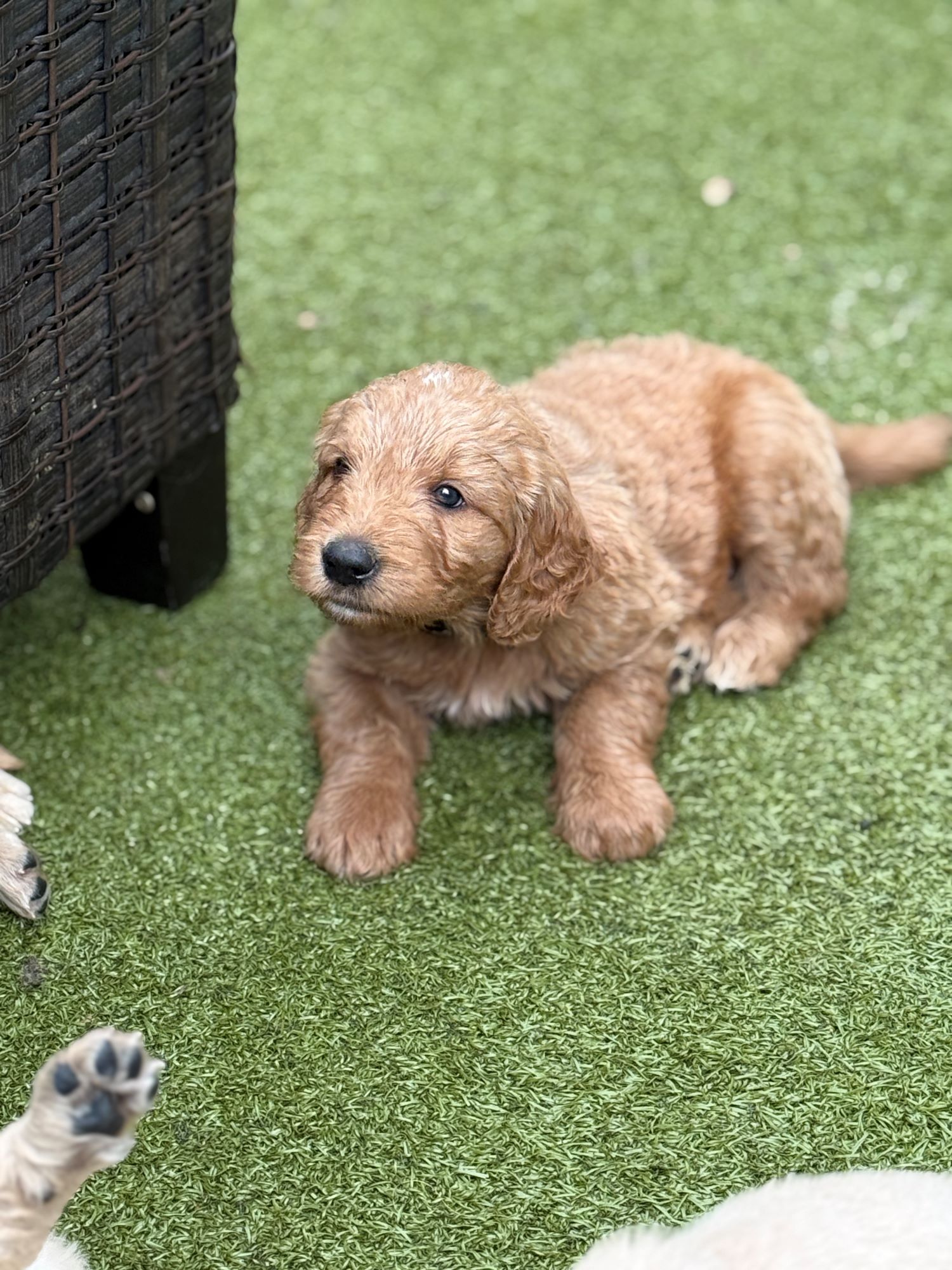 Puppy Puppy Puppy
Baxter & Bella Online Training teaches the Bell Potty training system! The information below is basic and not the bell system.
This can be a very intimidating process, but with consistency, positive reinforcement, watchfulness and timing, potty training can be a successful process. Today, your puppy is 90% pad trained, this means that they know what the pad is for, how to use it and will actually go looking for it (in the same place) when they are out of the pen and need to go potty. Sometimes, they are so excited and play so hard that they forget they need to use the pad and just go potty where they are. However, you will know! They will put their nose to the ground, start sniffing and running in circles or exploring the floor! Immediately say, GO POTTY ON THE PAD, or take them outside, whichever you are trying to accomplish. Your puppy has been using the pad in their daytime pen and their nighttime pen. They are fully aware of using it!
At 8-10 weeks old, puppies will usually go to the bathroom just a few minutes after eating/drinking. When you notice your puppy losing interest in his food, put a leash on your puppy and take him outside to a designated potty spot. Say GO POTTY (or whatever word cues you’ve chosen) and walk your puppy around a bit and praise him when he goes potty, saying GOOD PUPPY (or whatever word cue you’ve chosen). Do not let the puppy off the leash or let him play until he has gone potty. Your puppy has been trained using the grass potty tray previously linked. You may find it helpful to use one of these in your designated indoor or outdoor potty area. You can also use the clicker or a word marker (using the word “YES” in an excited, happy voice) during training. As soon as the puppy starts going potty, click the clicker and say GOOD PUPPY (or whatever word cue you’ve chosen). If your puppy is having a difficult time with potty training, you may want to offer water to your puppy every 30-60 minutes during the day instead of leaving it accessible at all times. This will allow you to better monitor your puppy’s need to go potty.
When inside, always monitor your puppy. Make sure you can see him at all times and watch for these signs that he has to go potty:
-Circling
-Sniffing
-Trying to sneak off and hide
-Squatting
-Dragging their tushies on the floor
– they get the feeling they need to go but not sure what that feeling is – so they drag or scoot on their behinds. If you see any of these things happening, pick your puppy up immediately and take him outside to his potty spot and say “GO POTTY” and praise him as he’s going. If you are busy and cannot watch your puppy, put him in his crate/pen. Puppies do not want to potty where they sleep. Or, you can put your puppy on a leash while you are working/in the house. When you feel the leash move, you can check on your puppy to see if he is exhibiting any signs of needing to go potty. Make sure to carry your puppy outside when he has to go. Timing is everything. If your puppy has an accident, clean it up (blot it and spray with 50/50 water and vinegar solution), but don’t yell at or punish your puppy. If you catch your puppy in the act, say NO in a firm voice and take him out immediately. Always praise your puppy when he goes potty outside. Puppies that are 8-10 weeks old will need to go out about every 30 minutes to establish the habit of going potty outside. As your puppy ages, you can gradually stretch the time to an hour between outside potty trips until finally your puppy will let you know when he needs to go out. There are several apps (both free and paid) to help you monitor your puppy during potty training. You may find one helpful. We have used the app Puppy Potty Log (APPLE CLICK HERE) (ANDROID CLICK HERE) with great success. It can take up to 8 weeks after your puppy comes home for him to be successfully potty trained. Stay consistent and use lots of positive reinforcement during the training process.
Bell Training
If you are using potty bells, hang them near the door your puppy will use when you take him out to go potty. As you are taking your puppy outside, ring the bell (using your puppy’s nose or paw), praise him, and take him outside to his potty spot. If your puppy starts to chew on the bells or rings them just to go outside, be consistent and take him outside to his potty spot, even if you know he is just playing. He needs to learn that ringing the bell will always mean that he needs to go outside to potty. See the Baxter and Bella Training Program for more details.
Helpful Link: https://www.cuteness.com/article/puppy-bladder-development/
The crate / playpen can be a very helpful tool when your puppy is young and throughout his life. We have introduced your puppy to the open pen. Our goal has been to make the pen an interesting and safe or fun place to be. You will need to do the majority of the actual pen training once your puppy is home with you. To start, place a bed on one side of the pen, place the potty pads on the complete opposite side of the pen. In the middle of the pen you can place toys and food/water. If you have made this pen a small 4×4 area, you can still accomplish the above, just minimize the amount of toys and have a smaller bed. At night, cover the pen sides with towels, sheets or blankets so your puppy can’t see out.
You can pen your puppy when you can’t watch him (when you are home or when you leave the house for short periods of time) or for naps and at night. In a happy, excited voice, tell your puppy GO TO YOUR PEN/BED (or whatever word cue you choose) and praise him when he goes in. You can put safe toys (rubber Kong, ball) in the crate with your puppy but be careful not to include toys that can be harmful when not watched, like stuffed animals with fur or bones that they can choke on. Never use the pen as punishment. However, if your puppy gets overstimulated, you can put him in the pen for a rest period and to calm down. You should try putting your puppy in the pen during the day when he first comes home and before you put him in for bedtime. This will help familiarize him with his pen and help you differentiate between whimpering/crying to get out or to go potty. Your puppy has been trained to understand and live in a pen at our home. We “house” two different pens for them. One is the daytime playpen and the other is the nighttime sleep pen. They are used to being in these areas and understand the difference. We are not suggesting that you have two different ones, however please note, that your puppy is not ready to have the run of the house and needs the structure and safe place to call his own. You can eventually over time, have them out of the pen more during the day and create boundaries for them. At 8-10 weeks, your puppy should be able to sleep about 7-8 hours at night in his pen, but might wake up once in the night to go potty. (Make sure not to offer food or water after 8pm.) I suggest placing the pen near your bed or in your bedroom.
Cover the front of the pen with a blanket or sheet to signal to your puppy that it is time to sleep. They have been experiencing this at our home. I cover the sides of the pen with blankets and sheets – NOT THE TOP. If you hear your puppy whimper in his pen, CARRY him out to potty IMMEDIATELY. If he is just barking and crying to get out, ignore him or say NO BARK in a firm, low tone. Do not continue to repeat yourself as it will only make matters worse, one time or a couple of infrequent times you may say NO BARK, but otherwise, we suggest ignoring the behavior. This way the puppy isn’t associating his barking/crying with attention (negative or positive). You also may not hear your puppy in the middle of the night as they are used to using the pad to go potty and then go back to sleep. They have been sleeping in a dark and quiet room and have been sleeping through the night successfully for the last 2 weeks. Another method of soothing is the puppy soother, this is a puppy stuffed animal with a heartbeat. You can find this puppy on the supply list.
Midnight Potty Breaks – Training Your Puppy to Go Outside Potty
Puppies are tiny and their bladders are even smaller! During the first few nights that your puppy is at home, you’ll most likely be woken up in the middle of the night for a bathroom break. Listen to his cry and respond quickly. Take him out to his potty place outside and be patient. This is the hardest time to keep your cool and not lose heart. The puppy will probably wander around and make a lap or two or five around your yard which can be very difficult at 2:37 a.m. Let him take a lap or two or five and potty when he needs to. This is going to keep reinforcing the need to go outside for any potty business no matter the time. After the puppy does his business, reward him with lots of praise and some run around time for a moment outside. By rewarding him with this play, he’ll get the idea cemented that going outside is good for him and good for you. It won’t just be a chore for him but a time to run outside and play after he does what he needs to. Please note that your puppy is pad trained and if given enough room in their pen, they know that they can use the pee pad at night to go potty if you choose to not wake up in the night. If you are reluctant to continue with the pad training, then I would suggest making their sleep area at night only their bed, which forces them to cry or wake up and request to go potty, as puppies do not typically go potty where they sleep.
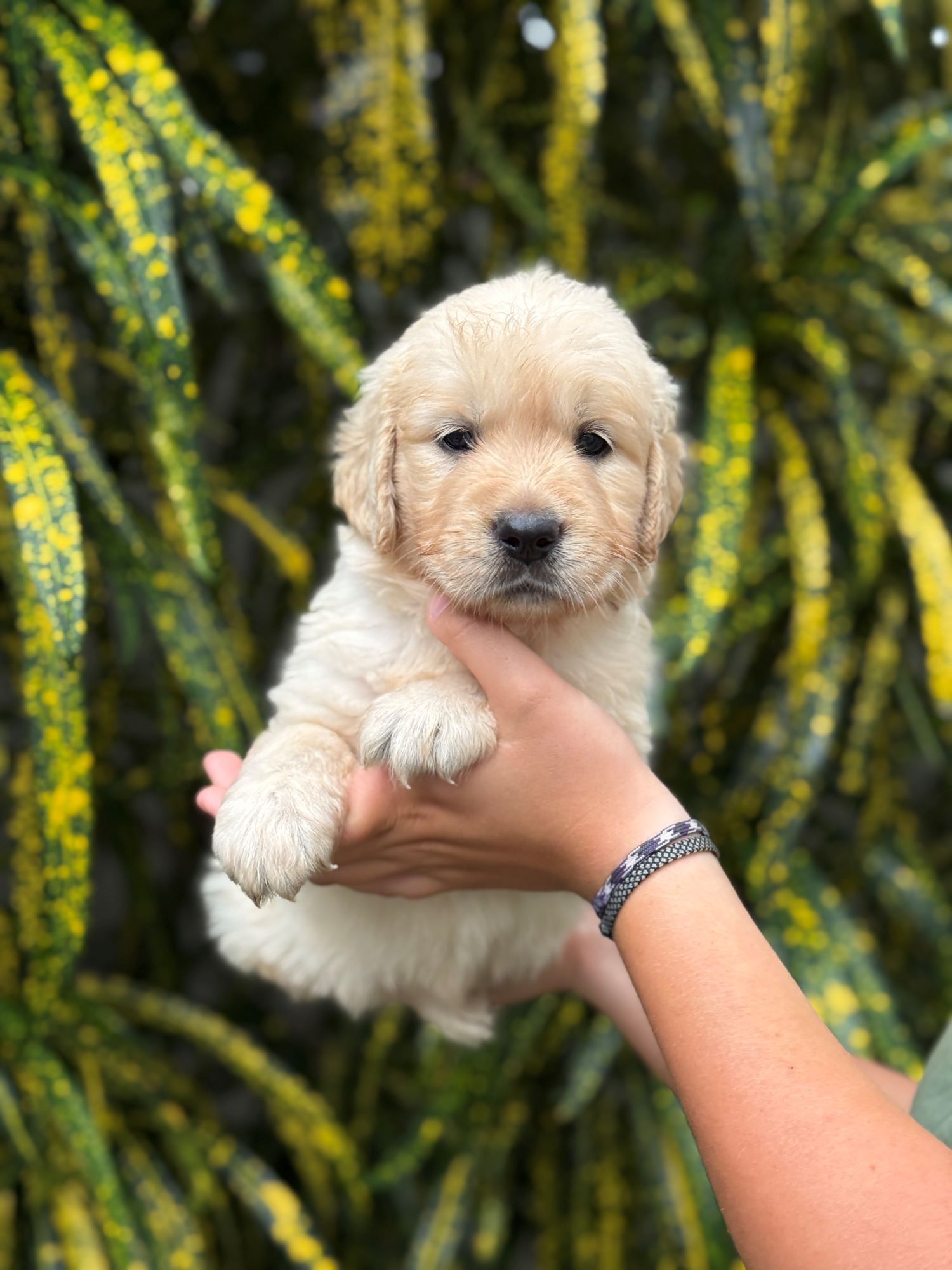 Crate/Pen Training
The yes area set up is so important for your new puppy!